Chronic fatigue is one of the most common and challenging experiences people bring into our practice, and for many, by the time they walk through our doors, they’ve already tried almost everything imaginable.
They’ve switched diets – vegan, vegetarian, carnivore, high-protein, no sugar, etc.
They’ve tried the supplements
They’ve tried medication.
They’ve tried sleep-hygiene routines, breath-work, circadian re-training, grounding, cold plunges, and warm baths.
They’ve tried the lifestyle shifts
And sometimes these things do help.
But for many people at Roots, the needle barely moves – or doesn’t move at all.
Which is when the frustration builds
The situation gets worse
Hope begins to fade
You unconsciously begin to accept it as your normal
We’re seeing this across the board – adults, older adults and in our younger population: teenagers and children. Chronic fatigue is creeping into every corner of society.
This blog is to reveal what can be behind the veil of the chronic fatigue picture. When we improved this system’s functions, the needle began to shift in a way that matters.
Let’s talk about the nervous system.
What Is Chronic Fatigue (Without Labelling or Diagnosing)?
In this blog, when we talk about chronic fatigue, we’re not putting a diagnosis on someone. We don’t diagnose conditions in our practice – that’s not our role in healthcare
But what I want to explore is the common experiences that so many people share in our practice with chronic fatigue:
- Ongoing, unrelenting tiredness
- A mental “drag” or brain fog
- Difficulty focusing
- Emotional overwhelm
- Increased anxiety or low mood
- Insomnia or broken sleep
- Generalised aches and pains
- TMJ pain, Headaches or dizziness
- Neck or lower-back tension
- Gut issues or IBS
- Feeling regularly “ill” or run down
- Heart palpitations or episodes of headiness
- Sensitivity to stress, noise, lights, or environments
- Sometimes a “numb” feeling – you’re not sure why you just don’t feel anymore
And many people who come to us have been labelled with things like:
- Chronic Fatigue Syndrome (CFS/ME)
- Fibromyalgia
- Inflammatory conditions
- Complex Regional Pain Syndrome
- Nutrient deficiencies
- Dysautonomia-type presentations
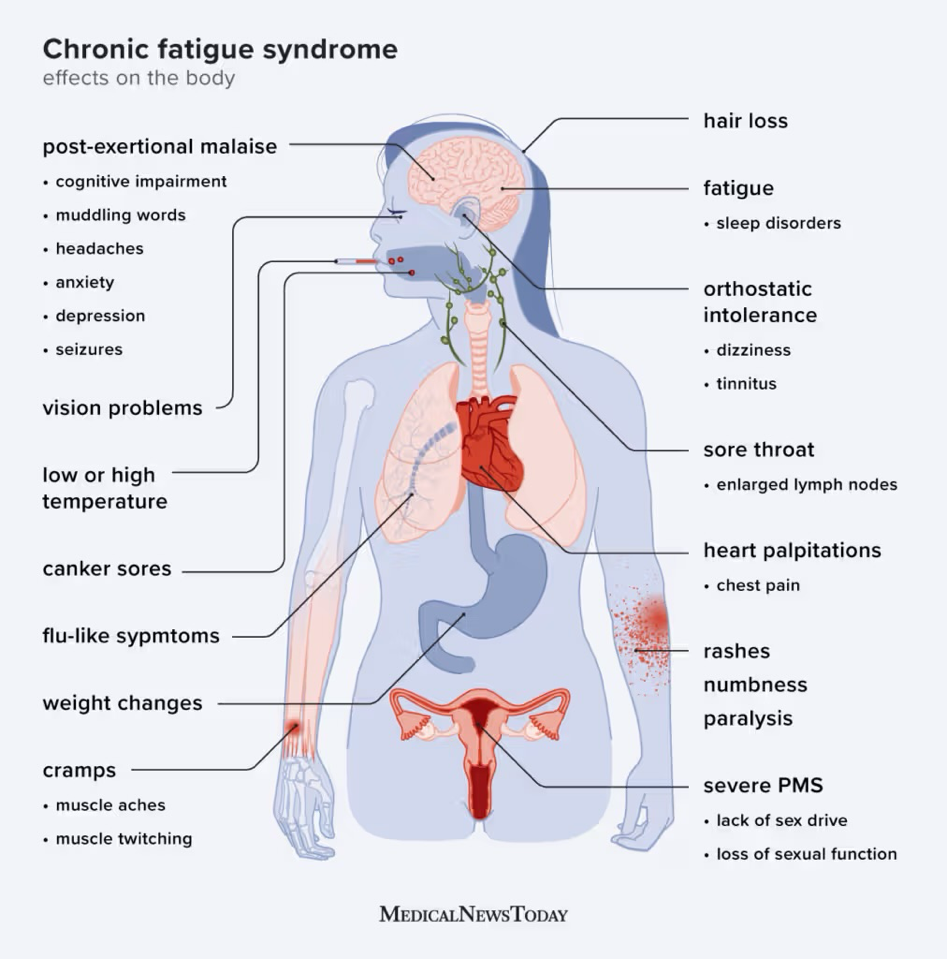
Again, these diagnoses are not something chiropractic treats. Many people receive diagnoses, which predispose us to treatment, which in the world of healthcare leads to an “outside-in” approach – accounting for the symptoms, not the person.
We look at things slightly differently; we want to help the person regulate better. Why? Because our bodies have an inherent drive to heal and thrive, if they are enabled to do so.
A little, very important detour…
Chiropractic recognises that our bodies are intelligent, albeit it may not feel like it sometimes. There are natural processes that keep our body alive and adapting, healing and thriving.
Think about it – all the different parts of the body must work together as one unit. All the aspects of the body, the muscles, hormones, and organs, do not function independently of the whole. Our nervous systems are always trying to coordinate function to keep us alive and bring us back to proper regulation and a thriving state.
When symptoms, e.g. fatigue. arise in the body, it is either a sign:
- of physiological damage that requires healing
- that the body is doing what it can and is needed
So rather than saying “take this” or saying “avoid that completely, “you need to do X more; we focus our work on improving the intelligent function of the body so it can heal you internally. Overtime the symptoms, the alarm bells, the feedback can change, i.e. fatigue is no longer “needed”.
This is how we get lasting change without chasing fatigue or guessing what the “problem” is…
Our role is to support the body’s internal coherence so people have a better chance of healing and functioning well, regardless of the labels they’ve been given. We do this through this by supporting an incredibly complex system…
The Nervous System: The overlooked master
This is where things become interesting.
Many try diets, supplements, and routine changes (all can be and are supportive) but very few people have heard how chronic fatigue can relate to nervous system function.
This matters. A lot.
Here’s why:
Your nervous system is the body’s intricate communication network – the conductor that brings the band together to ensure the music is good I.e. your body functions optimally
Your nervous system’s main job is to:
- Process what’s happening internally (sensory input from within the body)
- Process what’s happening externally (what’s happening in the world around you)
- Decide the best course of action – feedback is expressed, e.g. I feel good, I don’t feel so good.
The first priority is always internal safety.
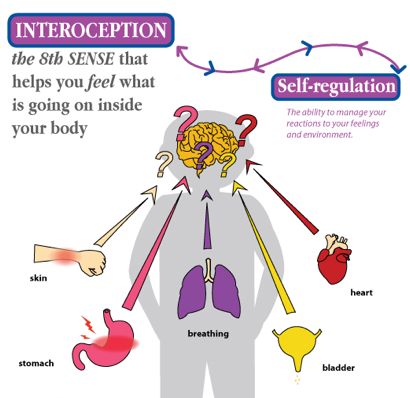
If your system cannot accurately process what’s happening inside you –
It is going to expend excess energy to find clarity so it can feel safe –
It’s going to struggle acting comfortably in the world.
Poor sensory processing results in a lack of safety. What do I mean by this? The less clear the communication one’s nervous system is getting, the less ‘safe’ the system ‘feels’.
Your nervous system requires high quantities of quality sensory information that it can use to determine: What is going on internally – am I safe?
Excess energy will be spent trying:
- to determine the internal state
- To find clarity through sensory stimulation (there are many ways to find stimulation in the modern world).
Why? Because our nervous systems’ need clarity
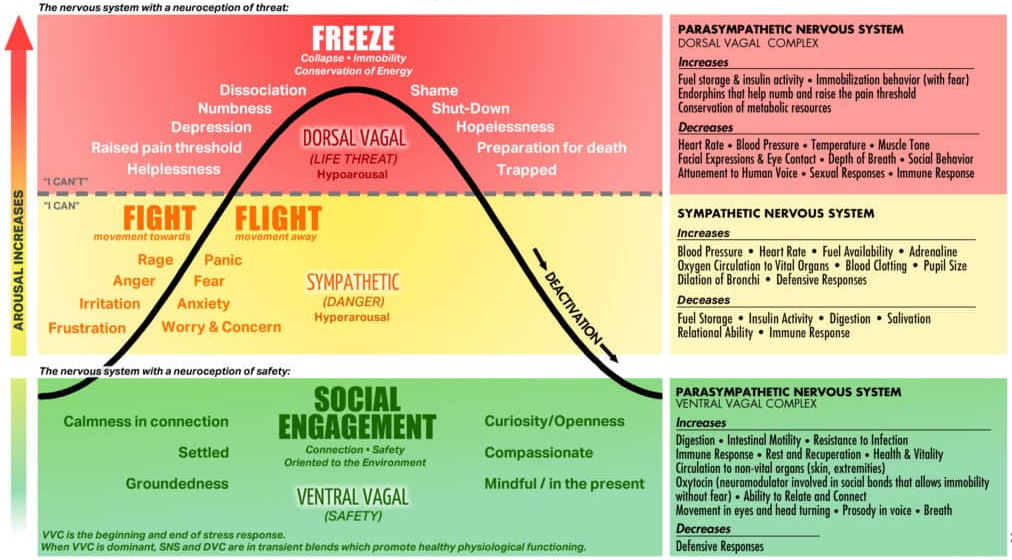
When a system feels “unsafe,” specifically here on a subconscious level, you get unconscious overwhelmed – think about a time ‘everything was happening at once and you could not keep up’ it’s the same thing to your nervous system. This is sometimes described as excessive sympathetic tone i.e. survival mode.
- Overwhelm
- Body Tension
- Difficulty recovering
- Difficulty focusing or planning
- Emotional instability
- Body sensitivity changes – either more or less sensitive (being numb or hypersensitive to pain is not good!)
The key thing is this:
Fatigue is not always a problem of “not enough energy.”
It may also be a sign of a system that is overwhelmed by poor sensory processing.
Sympathetic vs Parasympathetic Tone
When someone is stuck in a sympathetic dominant state (even mildly), they may show signs like:
- Rounded shoulders
- Protruded or retruded jaw
- Chronic mouth breathing
- Tension around the abdominals
- Tight neck muscles
- Cold hands and feet
- Shallow breathing
- Difficulty resting
- Trouble with digestion
- Always feeling “on alert”
Parasympathetic tone (vagal tone) is what brings the system back into recovery, restoration mode. Think of parasympathetics as the “coolant” to the “fire”.
People experiencing chronic fatigue are not “lazy.”
They are not “unmotivated.”
They may not need more medication more things to ‘add or change’.
Their nervous systems need more clarity, more safety, more calm.
They are physiologically stuck.
Their body isn’t accessing recovery mode efficiently.
If your nervous system is not robust, adaptable and strong then dealing with the envrionement is going to be that much more difficult.
When the Nervous System Gets Overloaded
In our practice, we see many clients whose nervous system is not properly supported.
Not consciously.
Not because they’ve done anything wrong.
Not because the daily life is too much for them (you are stronger than you think!)
But but because their nervous systems ability to adapt is suboptimal.
You see two people can be in the same environment – one person can have chronic fatigue while the other person is thriving – what is the difference? The person!
That is not to be disempowering or “blameful”, in fact, it is meant to be quite the opposite – it means the solution is within you and everyone has access to it!
But because their systems are constantly dealing with unclear, chaotic, or overwhelming sensory input – especially from the spine. It’s like trying to run when you feet are stuck in the mud!
If the nervous system is receiving:
- Uncertain signals
- Erratic signals
- Poor sensory feedback from muscles, joints, and tissues
…it can’t organise this information properly.
And when the unconscious brain is overwhelmed, the conscious brain feels it as:
- Fatigue
- Brain fog
- Shutdown
- Irritability
- Mental heaviness
- Difficulty coping
This is where Chiropractic comes in.
Chiropractic: The Spine and Your Nervous System
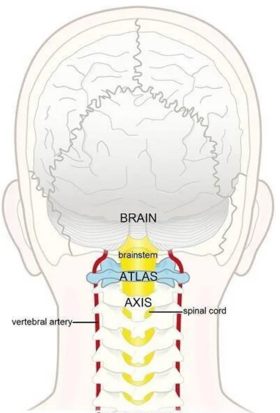
Your spine isn’t just a stack of bones.
- It houses the brainstem, which plays a major role in all autonomic functions (i.e., all the things we don’t consciously think to do – heart rate, digestion, breathing, immunity, reproductive system, etc.).
- It protects the spinal cord (literally, your brain passing into your body)
- It influences sensory input into the nervous system (we have spoken at length about sensory input)
Proper spinal function is when the individual vertebrae of the spine moves properly and the upper neck is properly aligned. This dramatically influences the quality of signals that the nervous system receives.
If the input is unclear, the output (symptoms) reflect
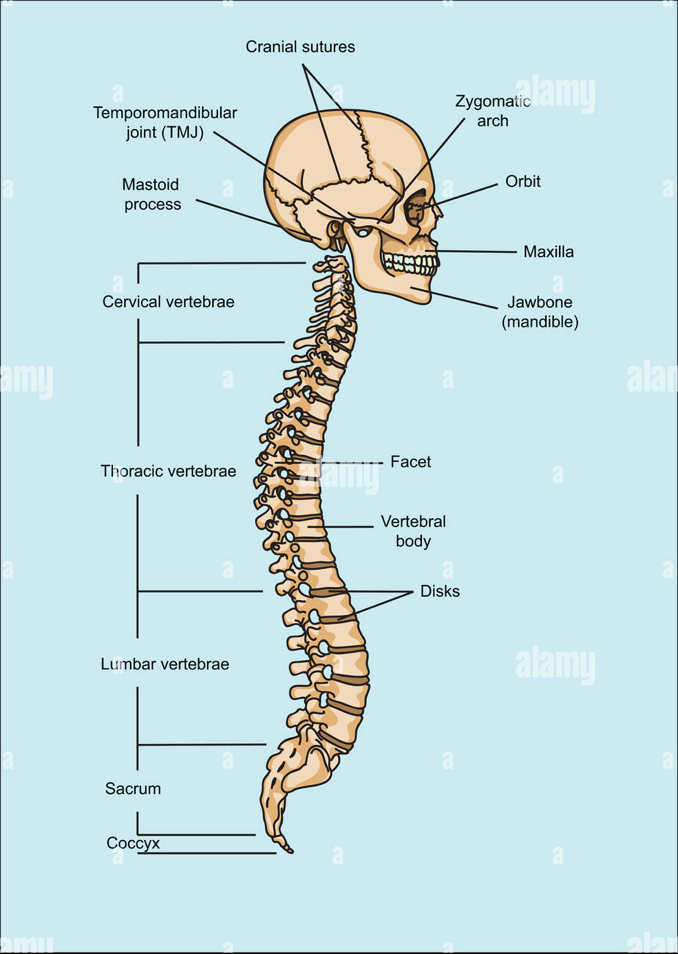
This is why spinal trauma – in the neck, upper cervical region, mid-back, lower back, pelvic stability – can create a cascade of nervous system stress. Trauma does not have to be a big car crash – it can be the body not being able to deal with sitting for long periods, poor movement with activity, overwhelming emotional stress, sub-optimal diet.
When the spine is functioning properly, a number of supportive changes have the potential to occur, ensuring proper nervous system functioning and normal health and well-being.
Proper spinal function and stability allow optimal signalling to the nervous system
- Full body movement – optimal movement = high quality signalling
- Parasympathetic tone – calmer in the system
Chaotic and minimal sensory input in → (unconscious) lack of safety → overwhelm → exhaustion
Over time, as nervous system function improves in practice members, we have seen changes in previous symptoms such as:
- Fluctuating energy
- Increased pain
- Heightened stress response
- Difficulty regulating emotions
- IBS or digestive issues
- Headaches
- Dizziness
Not because the spine “caused” these things in a diagnostic sense, but because the nervous system was struggling to get clear, accurate information.
Interoception, Bracing, and Why Midline Stability Matters
Here’s something most people have never been told:
Your spine and surrounding musculature provide the brain with constant feedback about your internal state.
This is called interoception – your ability to feel what’s happening inside your own body.
If the muscles around the spine aren’t activating properly:
- There is poor midline stability (stability around the spine)
- Pressure is reduced around the organs
- Receptors in the gut and trunk don’t get enough sensory input
- The brain receives blurred or incomplete information
This lack of clear internal feedback can be exhausting.
When your system can’t “feel itself” properly, every environment becomes more demanding. Sympathetic (fight-flight-freeze) tone increases. This alone could increase fatigue.
Vagal Tone: Bringing calm to the internal storm
Proper vagal tone is the capacity to maintain parasympathetic “calm” activity in the body – this is reliant upon proper spinal mechanics as this can reduce stress on the vagus nerve as it passes through the upper neck – cervical spine – into the abdominal cavity. Additionally, proper spinal mechanics enable proper tissue tone that further supports midline stability.
The vagus nerve controls:
- Heart rate
- Breathing patterns
- Gut function
- Immune response
- Inflammation levels
- Emotional regulation
When vagal tone is low, you might see:
- Poor digestion
- IBS-type symptoms
- Food sensitivities
- Frequent infections
- Anxiety
- Poor stress recovery
- Emotional volatility
- Cold hands
- Palpitations
If the vagus nerve is struggling, the sympathetic (fight-or-flight) system tends to dominate.
This is where fatigue, gut issues, immune challenges and emotional overwhelm can coexist, as when we see improvements in vagal tone practice members report changes in these areas.
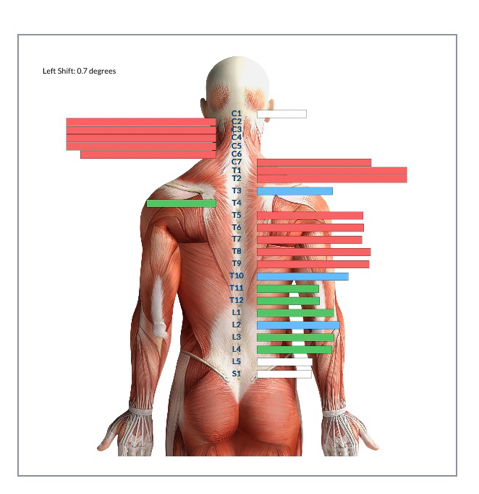
The scans below that we obtained during our assessment demonstrate poor vagal tone (look elsewhere for further explanations):

How Chiropractic Care Supports These Systems
Chiropractic care is not a treatment for chronic fatigue.
Chiropractic aims to support optimal nervous system function, meaning:
- Clearer sensory input
- Optimising spinal mechanics
- Improve vagal tone and reduce sympathetic overdrive
- Improve internal processing
- More efficient nervous system communication
When the nervous system works more coherently, our Practice members report:
- Recovering more efficiently
- Moving with less pain
- More consistent energy
- Deeper, refreshing sleep
- Digestion improvements
- Calmer
- Reduce inflammation – soreness, aches etc.
- Experience less overwhelm
We see this day-to-day in practice.
When we improve the connection between the body and nervous system – in a neurophysiological way – the output changes.
Better output = better life experience.
How We Assess Nervous System Function at Roots Chiropractic
Our assessment is to determine a thorough neurological and spinal assessment (read our blogs for details of this)
This Physical Exam includes:
1. Tonal Assessment – We assess sympathetic tone and parasympathetic tone in different spinal anchoring points in the body.
2. Structural Assessment – We check where spinal movement and alignment may be influencing nervous system input. Additonally we assess this in relation to the cranium, pelvis and entire body.
3. Neurological Scans (INSiGHT Scans)
These scans help us:
- Measure vagal tone
- Identify areas of neurological stress
- See patterns of sympathetic overdrive
- Track these changes over time
Our Approach to Care
Our goal is to support your neurological function to support your healing and ability to thrive – we do not do quick fixes.
We focus entirely on sustained neurological change, which means:
- Specific adjustments
- Progressive care plans
- Tracking outcomes
- Supporting long-term function
- Ensuring the nervous system can adapt
And this applies to all ages – children, teenagers, adults, and older adults.
Because nervous system regulation is universal.
Why This Matters for Chronic Fatigue Clients
When people with chronic fatigue begin chiropractic care, we often see:
- A slow but steady return of energy
- Better sleep
- Reduced overwhelm
- Less pain
- A reduction in headaches or dizziness
- Improved digestion
- Improved resilience
- Better emotional regulation
- Less “wired but tired”
- Fewer flare-ups
- Better ability to participate in daily life
Not because we treat fatigue, but because their nervous system is finally receiving the input it needs to organise itself.
A system that feels safe works better.
A system that works better feels better.
And a system that feels better lives better.
Final Thoughts
If you’ve been struggling with chronic fatigue – whether it’s been labelled or unlabelled know that Chiropractic can support you.
Supporting the nervous system gives your body the roots of health that it needs to thrive. That is how our Practice Members use Chiropractic to improve their quality of health.
I hope you have found this useful. It is not uncommon after reading this that you have a question, thought, or idea that you want explored. If you want to explore or discuss any of these further for you or your loved one, please reach out. Either by e-mail or mobile, for a free 10-minute telephone consultation with me personally to discuss if and how chiropractic care could best serve you or your family.
Kindest,
Morgan
References
Porges SW. The polyvagal theory: new insights into adaptive reactions of the autonomic nervous system. Cleve Clin J Med. 2009 Apr;76 Suppl 2(Suppl 2):S86-90. doi: 10.3949/ccjm.76.s2.17. PMID: 19376991; PMCID: PMC3108032.
Laborde S, Mosley E, Thayer JF. Heart Rate Variability and Cardiac Vagal Tone in Psychophysiological Research – Recommendations for Experiment Planning, Data Analysis, and Data Reporting. Front Psychol. 2017 Feb 20;8:213. doi: 10.3389/fpsyg.2017.00213. PMID: 28265249; PMCID: PMC5316555.