Dizziness and vertigo are incredibly common experiences – and for many people, they can feel frightening, disorienting, and disruptive to everyday life.
When we use the term dizziness, we’re referring to sensations such as:
- Feeling faint or light-headed
- Feeling unstable, wobbly, or disconnected from your body
- A sense of “floatiness”, “wooziness” or something ”off”
Vertigo, however, is slightly different. Vertigo is the distinct feeling that you or your surroundings are spinning, even though you are still.
It is common that our practice members report trying the medication, the therapies, the balance drills, and not finding much change, but they know something is going on, and they don’t know where else to go, which is when they find Chiropractic.
This blog aims to explore how chiropractic care may support those experiencing dizziness and vertigo – not by treating symptoms or medical conditions, but by improving the function of the spine and nervous system so the body is better able to regulate itself.
Our focus is on restoring neurological function, not symptoms. When the brain and body communicate clearly, your system is better equipped to find balance, process sensory information and move toward normal function.
Why the Nervous System Matters
Dizziness and vertigo are often linked with dysregulation within the vestibular, interoceptive and proprioceptive systems – now that is a lot of words. These are the parts of your nervous system that coordinate your internal environment relative to the external. If your nervous system does not know what is going on inside, it is not going to be able to go about the world.
This is about supporting the most foundational sensory information to the nervous system; if information becomes distorted or unclear, feelings of spinning, imbalance, or unsteadiness can follow. Rather than masking symptoms or chasing compensations, we aim to restore clarity in the nervous system on a fundamental level to allow your healing and function.
Chiropractic care supports normal nervous system function by improving alignment in the upper cervical spine, improving full spine function and coordination. These areas can alter normal nervous system function. We’re now going to explore the mechanisms behind how the nervous system can contribute to the symptoms that are often described with dizziness and vertigo in clients.
1. The Upper Cervical Spine
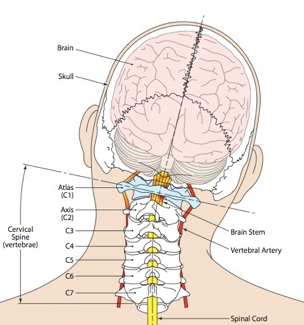
The upper neck is one of the most neurologically sensitive regions of the entire body.
Beneath the skull lie the suboccipital muscles, which have a direct relationship with balance, head positioning, and unconscious spatial awareness by providing an abundance of information to the nervous system..
When the upper cervical spine (CO, C1, C2) is not aligned and functioning well, signals to the nervous system about head-torso positioning may become confused or distorted. This may contribute to sensations such as:
- Unsteadiness
- Feeling “off-balance”
- Difficulty orientating in space
The upper cervical spine also has a close relationship with the vestibular apparatus, these 3-canals located in your inner ear, responsible for detecting head movement and acceleration. Confusion between the neck-head and the “ears” can lead to integration problems, potentially contributing to dizziness-type experiences and orientation problems
2. Cervical Reflexes, Vision, and Whole-Body Stability
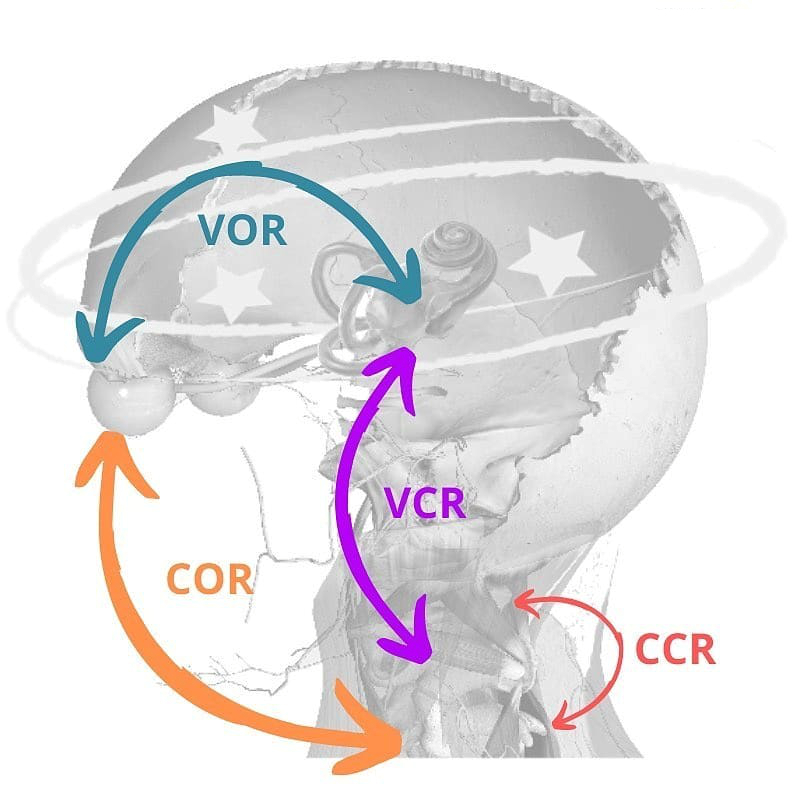
Two key reflexes link the neck to balance, eye movement, and head control:
Cervico-Collic Reflex (CCR)
This reflex stabilises the head on the body.
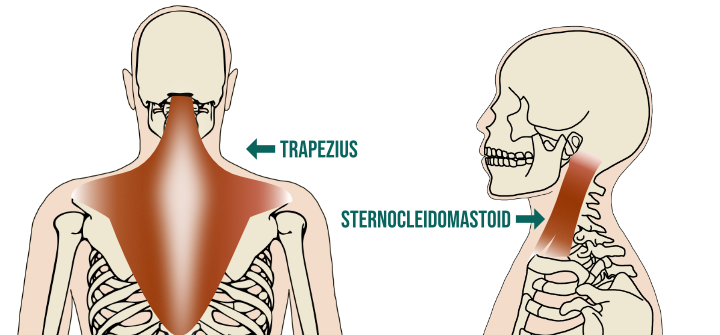
Muscles such as the upper trapezius (think tops of shoulders) and sternocleidomastoid (think in front of neck) help support head posture, but when the cervical spine lacks stability, these muscles can overwork. People may notice:
- Tired, fatigue
- Upper traps and neck tension, soreness, and achiness sometimes worsen during episodes
- Headaches
- Feeling unstable during movement
- Shortness of breath, narrow ribcage, low sternum
- Difficulty swallowing and chronic mouth breathing
Cervico-Ocular Reflex (COR)
This reflex helps stabilise your vision whilst your head moves.
Healthy eye tracking relies on the neck being stable – if it isn’t, visual clarity and balance may be affected. Upper cervical stability (and a good relationship with the sacrum, the base of the spine) is crucial in maintaining the spine that supports proper visual stabilisation.
A great example of this is thinking of a “big cat” like a cheetah hunting (or cats in general), very strong necks – eyes can lock in. An unstable upper neck gives little chance for the eyes to integrate into the system and stay stable.
Signs may include:
- Fatigue when using the eyes
- Difficulty focusing vision
- Blurry vision when moving the head
- Smooth eye motion and corrective eye control challenges
- Looking forward is draining
- Looking upwards is perceived as threatening
Poor neck function → altered ‘visual tone’ → harder to stabilise vision relative to the spine and skull → potential dizziness or visual discomfort.
Vestibulo-Collic Reflex (VCR)
The VCR is a protective stabilising reflex that helps keep the head steady when the body is in motion. When the vestibular system detects movement or acceleration, the VCR activates deep neck musculature to counterbalance the shift, keeping the head centred over the body.
If the cervical spine lacks stability or if vestibular input is unclear, this reflex may become overactive, underactive, or poorly coordinated. The result can be excessive muscle tension, head-wobbling sensations, or difficulty maintaining balance during movement. This dysregulation can contribute to feelings of dizziness or disorientation, especially during activities that involve turning or quick changes of direction.
Furthermore, the tone (activation) of the cervical spine is correlated with the tone of the muscles supporting the rest of the spine.
If you have low tone or excessive tension, poor depth, stability and alignment in the cervical spine, you are almost certain to experience poor tone in the rest of the spine. This is crucial because if the muscles on the backside of your body are not working corrected you’ll naturally compromise a significant area of neurological function (organs, ribcage, movement mechanisms, etc.). This may be why people also have neck and back soreness with dizziness complaints.
Think of these reflexes like you’re going on a journey:
You do not know where you are starting, so you ask a group of people ->
One person tells you one thing, so you begin to gauge a picture of where to go ->
Until another person in the group says something completely different ->
Then a third person disagrees with both of them…and so on.
This is the confusion your nervous system feels when the upper cervical spine, vestibular (inner ear) system and visual systems do not match.
3. Blood Flow & Brain Function
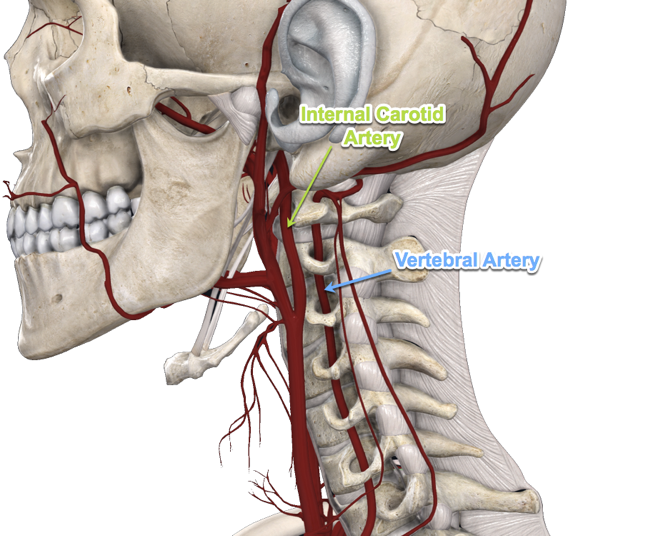
Cerebral blood flow plays a major role in the experience of dizziness or faintness. Poor blood flow to the brain -> poor nutrients for normal nervous system functioning. The arteries supplying the brain travel through and around the cervical spine, meaning proper cervical alignment and stability can influence how efficiently blood circulates to and from the brain.
Reduced blood flow may contribute to symptoms such as:
- Light-headedness
- Unsteadiness
- Loss of consciousness
- Visual disturbances
- Nausea
- Diaphoresis (sweating unrelated to heat/exertion)
- Panic or fear response
When the brain receives less oxygen, it becomes harder for the nervous system to maintain normal function, clarity, and calm.
4. Full Spine Function
Chiropractic’s influence on the nervous system is not just about the neck. Albeit a crucial component. Full spinal function plays a role in maintaining internal stability, pressure management, and nervous system tone.
Proper spinal function supports:
- Efficient oxygen delivery to the brain (nasal breathing connection)
- Healthy cerebrospinal fluid flow (helps cushion the brain and clean the nervous system, can be responsible for intense dizziness and ‘dropping feeling’)
- Autonomic balance and vagal tone
- Stable posture and core reflexes
- Interoception
Vagal tone describes how well the vagus nerve regulates the parasympathetic (calming) system, including unconscious functions like heart rate and breathing. When vagal tone is reduced, these systems can become unstable, potentially contributing to:
- rapid shifts in heart rate or blood pressure
- hyperventilation unsteadiness
- occasionally brief, seizure-like episodes often associated with positional change, jerk-like movements, very brief loss of consciousness, nausea, etc.
Poor vagal tone often goes hand-in-hand with reduced spinal stability, and together they can contribute to:
- dizziness
- Breathlessness when standing,
- rapid cardiovascular changes
- and heightened threat response within the nervous system.
If you’ve ever experienced dizziness or vertigo, you’ll know how disruptive and unsettling this can feel.
Interoception is the ability of the nervous system to determine exactly what’s going on inside the body. Sub-optimal interoceptive ability makes it difficult for the nervous system to respond to the environmental position in space. This interoceptive ability originates from midline input (spine, cranium, pelvis, viscera).
Additionally, either side of the spine has several small muscles, called multifidi, that provide an abundance of information to the nervous system about where we are in space. If these muscles stop firing properly, then less, or more confused, information goes to the brain, meaning less knowledge about where we are in space. When specific spinal vertebrae lose their relative coordination and stability, these multifidi go dormant.
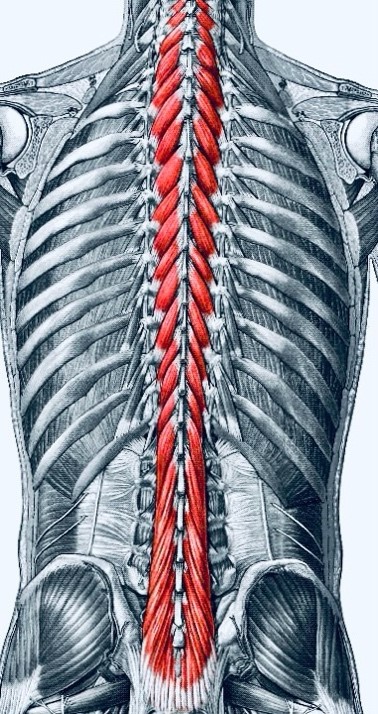
Chiropractic focuses on making specific corrections to the cranium and spine to support proper nervous system function to enable your body to recover, heal and thrive naturally. Using our approach, many of our practice members have reported seeing an improvement in symptoms such as dizziness, vertigo and other associated symptoms as a by-product of their unlocked, natural and NORMAL function – not condition treatment.
What contributes to poor spinal and neurological stability?
Many pathways can lead to nervous system dysregulation over time:
Major Physical Traumas
- Car accidents or other Whiplash incident
- Head injury
- Falls or sacral trauma
- Intense emotional events
- Birthing process
Lifestyle Traumas
- Sedentary posture or device-based habits
- Emotional tension stored in the body
- Poor movement variety
- Nutritional and chemical stressors
- Repetitive behaviours or sustained positions
Small habits repeated over years can shape nervous system tone just as powerfully as large, sudden traumas. Please know that trauma is stress the body has not adapted to optimally. None of these are “bad” until our nervous system can no longer adapt to them.
Many practice members report improvements such as:
- Feeling more grounded and balanced
- Clearer head and vision
- Less fatigue in the eyes and neck
- Improved sense of calm and body awareness
- Reduced dizziness or unsteadiness over time
Not because we treat symptoms – but because the nervous system is better able to organise, adapt, and regulate itself. The nervous system is the core system in the body that needs to function at its best. Not supporting proper nervous system functioning is like trying to build a house without the foundations in place first.

Chiropractic at Roots
At Roots, our process is detailed and precise.
What makes us different is our deep understanding of the global patterns as it relates to the spine and nervous system. As well as HOW to address this and TRACK your progress over time.
- Global Tonal Assessment
- Integrated Specific Spinal Assessment
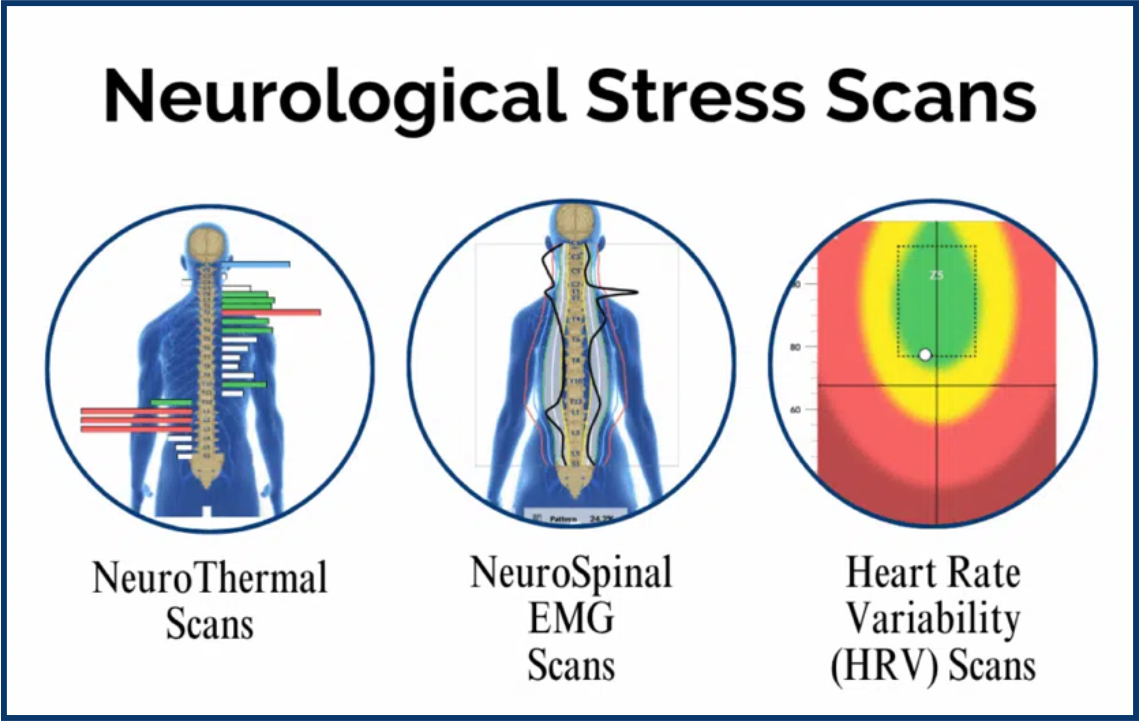
- Objective nervous system scans (Insight Scans – HRV, Thermography, sEMG)
Through a thorough neurological and structural assessment, we can get to your specific issue that is stopping your nervous system function at its best.
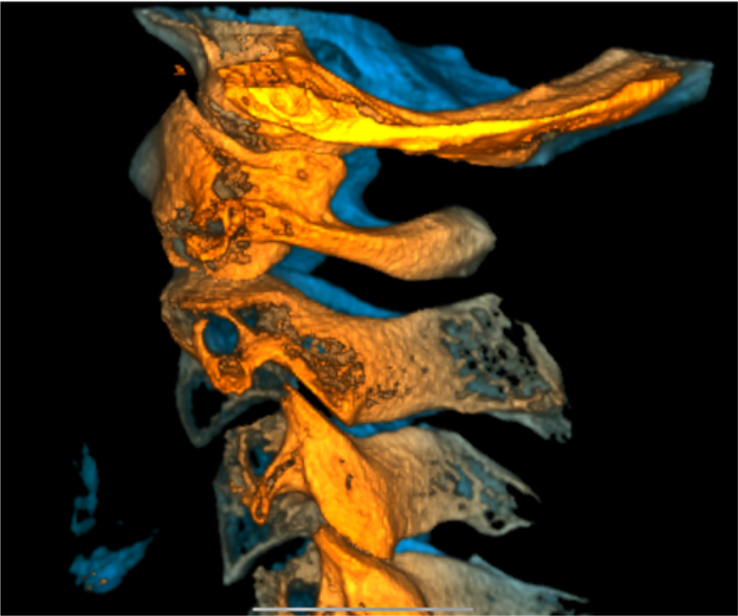
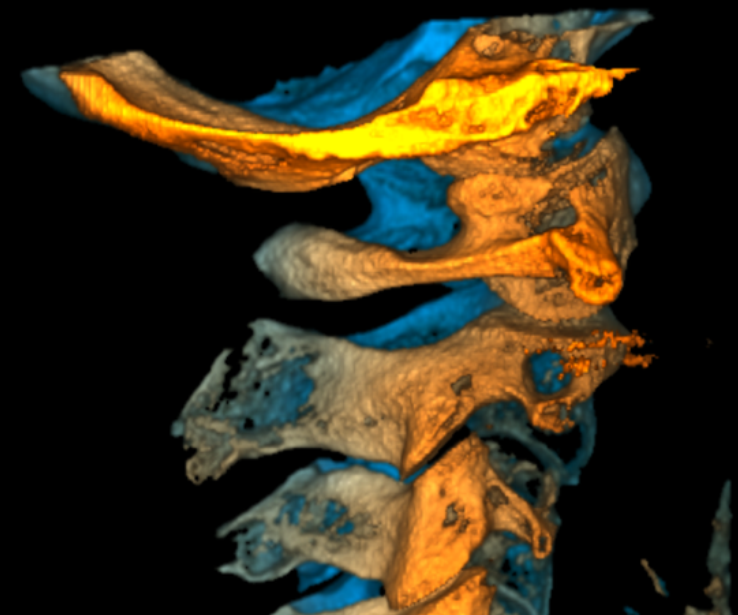
Additionally, our Chiropractor is trained in Upper Cervical Specific care, meaning that when appropriate, we can refer patients for detailed 3D CBCT imaging. These scans provide an exceptionally clear view of the upper cervical spine from multiple angles, helping us identify whether structural changes may be affecting nervous system function. Referrals are made to our trusted 3BEAM team in Harley Street, Central London (around a 50-minute journey from Horsham), particularly for complex cases such as those with significant head trauma or limited progress through other forms of care.
The scan fee, currently £200, is paid separately. This level of imaging gives us another way of identifying highly specific information, supporting the most accurate, safe, and individually tailored care.
When the body functions better, symptoms often shift as a by-product of normal restorative processes, not force.
We support all ages in the community. I would like to mention that what we have discussed here is relevant to everyone, from our younger population to the older population and everyone in between. No matter what age, this experience of health can be intensely troubling and frustrating, for you and/or your loved one, especially when you’ve tried other things that may have only shifted the needle slightly.
More often than not, questions about you or your loved ones’ specific situation arise from this information, so please reach out and follow us on social media if you have any questions – we’d be happy to help. I look forward to hearing from you soon.
Warmest regards,
Morgan
References
Treleaven, J. (2008) ‘Sensorimotor disturbances in neck disorders affecting postural stability, head and Eye Movement Control’, Manual Therapy, 13(1), pp. 2–11. doi:10.1016/j.math.2007.06.003.
Sung, Y.-H. (2022) ‘Suboccipital muscles, forward head posture, and cervicogenic dizziness’, Medicina, 58(12), p. 1791. doi:10.3390/medicina58121791. What is vasovagal syncope? (2025) Cleveland Clinic. Available at: https://my.clevelandclinic.org/health/diseases/23325-vasovagal-syncope (Accessed: 30 November 2025).