Health issues come with a myriad of concerns, frustration and worry. To deeply understand your problem and to help you experience meaningful change, efficiently, with your journey to optimal health, you need a specific plan. The cornerstone of an efficient care plan are specific ways of measuring progress – so you know where you are starting, what needs to be done and to ensure that you are progressing. This blog is about how we do that at Roots.
Let’s lay the Chiropractic Groundworks First
Chiropractic care is founded upon the fundamental recognition that your body is designed to heal, adapt, and thrive when your body is supported by an optimally functioning nervous system. This is not an extraordinary state — it is the normal, natural state your body is meant to experience 24/7.
When your nervous system can communicate clearly, regulate efficiently, and respond fluidly to the demands of life, every system in your body benefits. Healing becomes more efficient, stress becomes more manageable, and your overall adaptability increases.
Think about the last time a paper cut that you got did not heal – it didn’t happen! The wound closed, scarred, tissue healed over. This most certainly is not to say that there aren’t instances when the body doesn’t have the capacity to heal – the body needs enough and internal fuel to get the healing done but the intelligence of the body will always try to keep us healing, adapting and thriving. We aim to work WITH this inherent capacity to heal to get the results that we get here at Roots.
At Roots Chiropractic, our objective is to support and promote optimal nervous system function so that your body can function the way it is designed
To do this well, it is essential that we measure, monitor, and understand how your body is progressing through care. Tracking progress helps ensure that your body is healing appropriately, allows us to adjust your care plan with precision, and helps us tailor your chiropractic experience uniquely to you.
Why Tracking Progress Matters
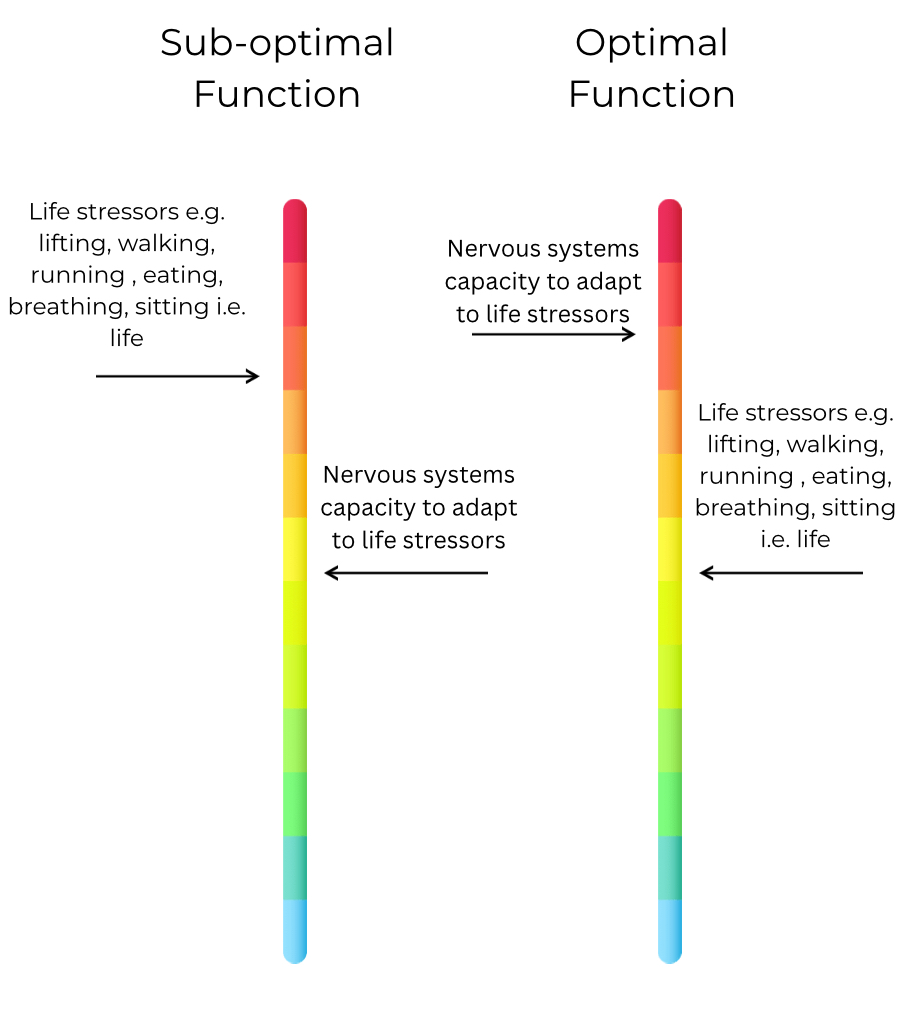
Your nervous system is dynamic – it is designed to adapt to your:
- Emotional environment –all types of relationships, career/job satisfaction, opinions about yourself
- Physical environment – your chosen posture, your work life, activity levels and demands
- Chemical environment – foods you eat, air pollution, and fragrances put on your body
Because of this, we track people’s nervous system adaptability to determine how well their body is adapting to your particular environment, as no two nervous systems are the same. Therefore, being able to track your progress through care is crucial to us to best ensure your continual ability to get to, and be at your best.
Tracking your progress allows us to:
- Ensure your body is adapting and healing appropriately.
- Identify patterns of stress or tension that may slow progress.
- Tailor your care plan as your body changes.
- Adjust your care frequency or technique based on what your nervous system needs.
Measuring your nervous system function gives us a roadmap – a clear picture of where you are and what needs to change as you move toward greater stability, connection, and adaptability.
So how do we measure your progress?…
How We Measure Progress at Roots Chiropractic
We use a combination of structural, neurological, and functional assessments that provide a complete picture of your nervous system’s performance. Each area of assessment reveals something different about how your body is functioning and adapting.
1. Specific Chiropractic Techniques & Analysis System
We use a precise, indicator-based chiropractic analysis system. This shows your chiropractor exactly when, where, and in what direction to adjust the specific structures in your body that need support – whether that is the spine, pelvis, or cranium.
Imagine little check marks or lights that give us the “green light” or “red light” to adjust, not to adjust and how well your body is functioning.

It is important to us that we are specific with where exactly each vertebrae/bone is positioned and if this challenging the ability for your nervous system to function normally.
This means we avoid adjusting compensations in the body. A vertebrae can be misaligned or not moving appropriately but NOT impacting how your nervous system is functioning! This is why it is not a simple case of feel and “crack” (many adjustments do not involve audible releases); we use specific Chiropractic techniques that tell us when and where to adjust to ensure that clarity in the nervous system is being supported by the adjustment
Adjustment – our word for the hands-on technique to support your body’s normal function
These indicators are monitored across your visits and throughout your care plan. They reveal how well your body is integrating and adapting to each adjustment.
Your spine, skull, and pelvis do not function independently. They operate as a unified network. If one area becomes stressed or loses proper motion, the nervous system can be pushed out of its most adaptable state. When this happens, everyday stress becomes harder to manage, and your body may regularly find itself “stuck” in patterns of tension or compensation, potentially contributing to many of the health complaints we see in our practice.
By tracking these indicators over time, we can see where you are in your healing process and how your body is progressing.
2. Deep Tonal Assessment
Our tonal analysis is a deep tissue and fascial assessment that identifies where you hold tension, where you lack tone, and how your body organizes itself under stress.
Your nervous system uses a series of anchor points – sometimes known as the five diaphragms to maintain stability and regulate tension throughout the body:
- The tectorial membrane (skull/cranium)
- The tongue and soft palate (skull/cranium/upper neck)
- The thoracic outlet (neck)
- The respiratory diaphragm (lower rib level)
- The pelvic floor
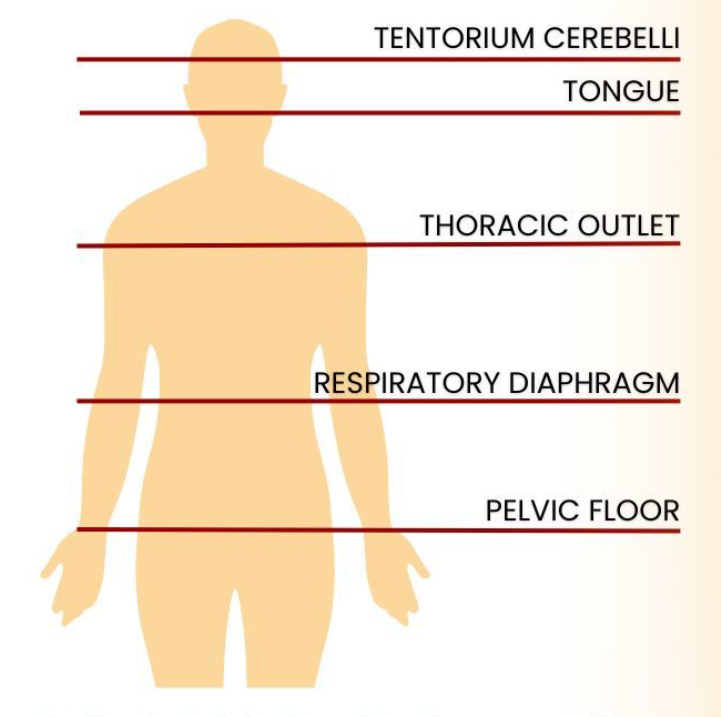
[Some also recognize the feet and elbows as additional anchoring points that relate to spinal stabilization]
These anchor points allow your body to remain grounded and well-functioning. However, when there is poor biomechanical function in the spine or cranium, these anchors can become strained or imbalanced.
This can impact how your nervous system’s ability to function by changing normal tension patterns in the body. This has the potential to lead to all sorts of symptoms – headaches, migraines, shoulder pain, tingling and numbness, back pain, hip pain, poor posture, increased mental strain and more!
Our tonal assessment helps us identify:
- Where tension is deeply embedded
- Where tone is insufficient
- Which patterns are affecting your nervous system’s ability to function
- How your body is changing throughout care
How do we do this?
Observation -> Palpation -> Pressure Testing
A. Observation
We look on a gross scale to begin with, observing holding patterns in the body: head forward posture, jaw development, teeth and palate expansion (natural/unnatural), other cranial indicators, depth and size of the neck, ribcage size, shoulder rounding, pelvic position (is it tucked, poking backwards), how the arms and lower limbs arm being impacted (good or bad tone?) – all these give us a picture about the state of your spine and nervous system in that moment, because you cannot have postural changes without the spine being impacted. A little overview in the diagram of gross observational changes that may be occurring:
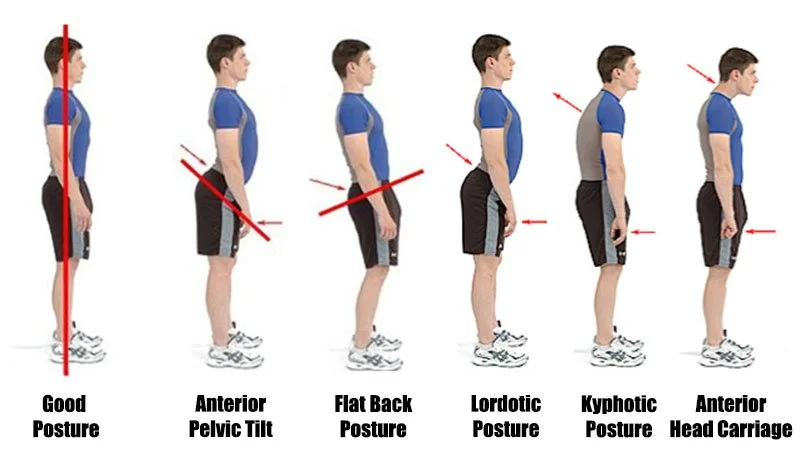
Now this still does not give the full picture. Some people stand like the guy with “good posture” but still have instability, weakness and poor movement that is caused by poor spinal function and anchoring. This is why structural observation is one part of our assessment procedure.
B. Palpation
We feel the different transition points to determine the tone of each area relative to the spine to determine how poor spinal stability and function is reflecting in the body. We couple this palpation with movement testing to begin building a full picture of what is occurring and how this may be impacting your nervous system
C. Pressure testing
This facilitates our understanding of where your deep tonal weaknesses around your spine are. The ability to manage a vacuum (created by an upright spine and decompressed skull) allows you to maintain an open upright posture NATURALLY. It is not about holding your shoulders back; if your spine is drawn forward, your body is lacking safety. Rather than forcing your body back, we want to introduce more safety (through the adjustment) that supports the nervous system to “reconnect” with a more upright position.
Test: Take a full exhale, then plug/block your nose with your hand -> attempt to inhale through the now blocked nose -> see how well you can manage that pull for (without cheating!) and what you feel. The ability to stabilise our spine should be a reflexive action. You should not feel the need to brace your spine. It should just happen. Little muscles ether side of your spine signal to the nervous system when stabilising activity needs to take place PRIOR to full motion occurring. If your spine is not moving well, your entire body does not move as well!
These tests determine how well your nervous system coordinates movement.
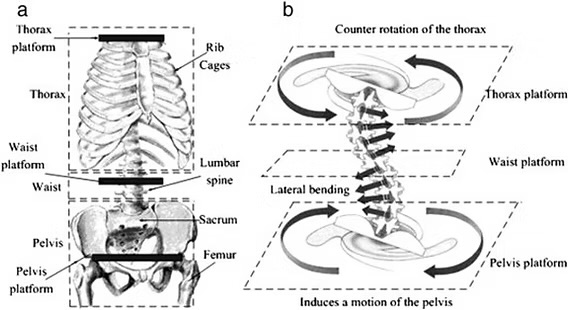
Nothing in the body functions in isolation. This assessment helps us see the full interconnected picture.
3. Neurological Testing
We regularly assess key neurological functions, including:
- Muscle testing
- Sensory testing
- Coordination
- Balance
- Chiropractic-specific muscle testing
These tests give us insight into how well your nervous system is communicating with your body. They help detect subtle changes in function, integration, and control that may not be obvious externally.
Neurological testing is an essential part of monitoring progress because it allows us to see improvements – or areas needing more support – before they become symptomatic.
4. Insight Scans
Insight scans provide an objective measurement of nervous system function. Your autonomic nervous system is the “automatic”, “subconscious” arm of the nervous system that controls all the functions of your body that you do not need to think about – digestion, cardiovascular function, immune system function, reproductive function, bowel-bladder function, etc.

They offer data-based insight into how stress is affecting your body and how your nervous system is adapting. This data is then collated and put into a report for you, giving you an individual and an overall “score” of your nervous system adaptability.
We use three primary measures with our Insight scans:
Heart Rate Variability (HRV) -> Thermography -> SurfaceEMG
A. HRV (Heart Rate Variability)
This is the ability for your heart to adapt to the ever-changing demands of the environment. High HRV = Better adaptability to stress this includes both mental or physical workload. This is a widely used measure of nervous system adaptability.
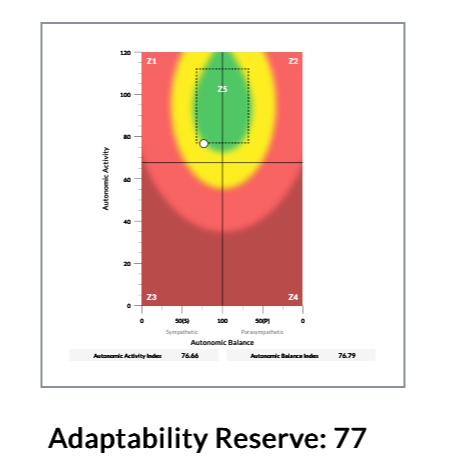
The Basics: This measures your autonomic nervous system’s ability to adapt. It tells us about your global stress load and your resilience.
A healthy nervous system shifts smoothly between “fight/flight” and “rest/digest.” States (known as sympathetic and parasympathetic adaptability). HRV shows how well your body is managing your ability to shift between these two states. This is important as if your nervous system is biased toward a “stressed” state, your ability to heal and thrive is more challenged – tension builds up, the body does not move as well, organ systems may not function at their best.
Some depth: The autonomic nervous system has two arms to it that I want to briefly mention here: a sympathetic – “fight/flight/freeze” mode and a parasympathetic “rest/digest” mode. We are supposed to be able to have a good balance between the two, a body that can heal and recover can switch between the stress response and recovery response. Most people are stuck in a stress response – in this state, your body can struggle to heal and regulate appropriately. If sympathetic activity goes unchecked by parasympathetic tone (highly controlled by the vagus nerve), then fight/flight mode takes over. Imagine balancing the accelerator pedal in a car with a brake, you want good balance between the two, not full gas and not full brake – most people are full gas, running out of fuel. Ideally, you want good parasympathetic tone even in stressed situations (more for another time).


B. Thermography
Thermography: This measures temperature differences along the spine that result from altered autonomic nervous system activity (i.e. reflect nerve interference affecting organ regulation. It helps reveal deeper patterns of chronic stress or imbalance.

Thermographic scans help us identify how patterns of stress in the spine are influencing autonomic behaviours. When there is stress in the spine there is the potential of altering nerve activity adjacent to the spine (via the ganglia). These cells control blood vessel constriction and dilation (i.e. activity controlled by the “automatic” part of our nervous system) which can lead to a temperature difference either side of the spine.
C. sEMG (Surface Electromyography)
This measures muscular tension and imbalance along the spine. It indicates how much energy your body is wasting through compensation or postural stress by measuring the electrical activity of the muscles on either side of the spine.
Excessive activity of muscles due to poor tone around the spine can contribute to fatigue, stress and overwhelm. Why? Because wasted energy is like a machine leaking fuel but not going anywhere – it makes the journey, when you do begin going, that much more difficult.

Our INSiGHT Scans are repeated throughout your care so we can track objective changes and ensure your nervous system is moving toward greater ease and adaptability.
Ongoing Reassessment & Care Plan Adjustments
We regularly reassess all these measures throughout your care plan. This allows us to track how your nervous system is changing, how your body is adapting, and how well your adjustments are integrating.
As your body progresses, we adjust your care plan to match what your nervous system needs next – whether that means changing visit frequency, technique, or addressing different areas to ensure we can support your contributed improvement and keep your nervous system adaptable for your health now and in the future.
Progress is a journey, and we’re committed to supporting your body every step of the way.
Our Mission
At Roots Chiropractic, our mission is for every individual, partner, child, and grandparent to experience a nervous system functioning at its highest potential – so you can live, heal, and thrive the way your body was designed to. By tracking your progress with precision and care, we ensure that every adjustment, every visit, and every stage of your care is purposeful and tailored to you. This is our role in supporting optimal health and wellbeing in the community, naturally.
If you have any questions about our assessment process or you want to explore how your health could benefit from a better functioning nervous system, please reach out with your questions. I would love to hear from you.
Kindest,
Morgan
References
Porges, S. W. (2007). The polyvagal perspective. Biological Psychology, 74(2), 116–143.
Bordoni, B., & Zanier, E. (2013). The five diaphragms in osteopathic manipulative medicine. Journal of Evidence-Based Complementary & Alternative Medicine, 18(4), 267–274.
Shaffer, F., & Ginsberg, J. P. (2017). An overview of heart rate variability metrics and norms. Frontiers in Public Health, 5, 258.
Arakaki X, Arechavala RJ, Choy EH, Bautista J, Bliss B, Molloy C, Wu DA, Shimojo S, Jiang Y, Kleinman MT, Kloner RA. The connection between heart rate variability (HRV), neurological health, and cognition: A literature review. Front Neurosci. 2023 Mar 1;17:1055445. doi: 10.3389/fnins.2023.1055445. PMID: 36937689; PMCID: PMC10014754.