When someone walks through our doors with headaches or migraines, they’re often frustrated – they’ve tried medication, drinking more water, posture braces, supplements, new pillows, new mattress and yet their pain keeps returning. It can feel like a mystery.
At Roots Chiropractic, community members seek chiropractic care to seek change in their headaches and migraines – this blog is to open the door to what may be behind our results.
Before we dive in, I want to explore one crucial element to our approach at Roots Chiropractic – we acknowledge that the key to unlocking your relief and optimal health lies within us, rather than outside of us. Our bodies are constantly regulating, healing and adapting – we work WITH your body’s natural regulating processes.
When we move, our bodies are attempting to coordinate that movement; when we injure ourselves, e.g. a paper cut, our bodies attempt to heal said cut; when we eat food, our nervous system kicks digestive processes into action, etc.
When experiences of health, such as headaches or migraines, come to the surface, it may be a sign that the body is unable to regulate normal processes in the body.
One of the crucial areas in restoring normal function to our nervous system is in one small, powerful area – the top of the spine.
The Cranio-Cervical Junction (CCJ): The Junction That Keeps It All Together
The CCJ is the point where your head and neck meet. It is how your head and the rest of your body interact – it is related to some of the most important, complex neurological structures in the entire body. Here’s a little list below:
- Spinal Cord
- The Brainstem – controls all autonomic function in the body
- Vestibular centres – via neck reflexes (such as cervicocolic, vesitbulocolic, and tonic neck reflexes) and the vestibular system
- Lymph nodes – relate to immune system function
- Vascular system – Arterial blood (for nutrients), Venous (waste drainage)
- Alimentary Canal – i.e. your digestive tubepasses from mouth-throat to the pelvic floor (associated with major safety-signalling systems in the body)
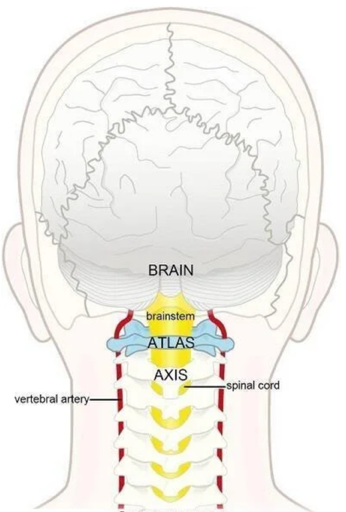
In short, it’s a really important area of the body for normal neurological function – problems here can lead to widespread changes for your health. To keep my mind centered here, we will focus on the experience of what is called headaches and/or migraines.
One that note, let’s talk a little bit of anatomy…
Anatomy: A look inside…
Your spine is made up of vertebrae, bones that protect your spine cord. These are all meant to move in co-ordination with each other to enable proper movement and support crucial structures that ensure proper system functioning.
Your neck consists of 7 vertebrae. The upper cervical spine consists of:
- the base of your skull
- C1 at the top of your neck
- C2, the axis just below.
The atlas, the first cervical vertebrae (C1) – is named after the mythological figure who held the world on his shoulders – which is quite fitting as the atlas literally supports the weight of your head. C2, is known as the axis, the ‘root’ of the entire junction.
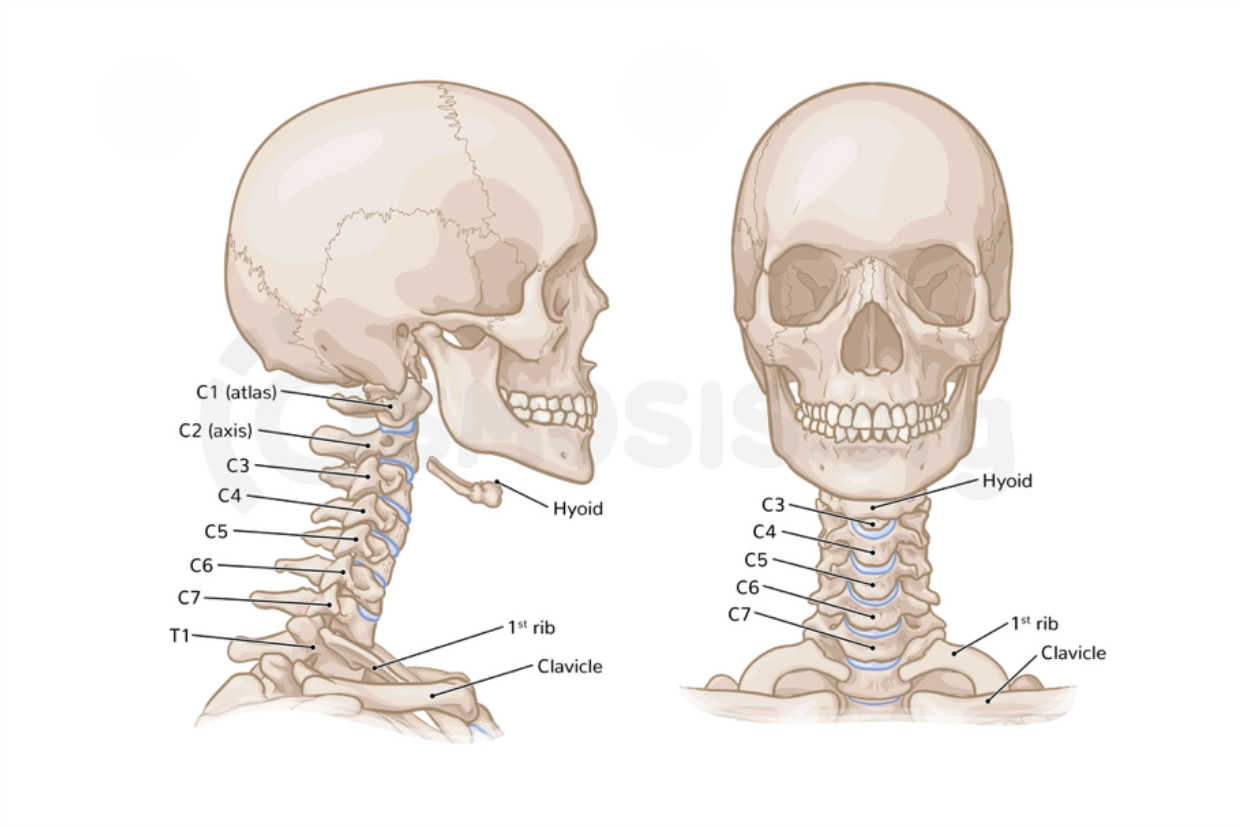
Unlike other vertebrae in the spine, the atlas doesn’t have a disc above or below it. This unique design means the entire CCJ has incredible mobility but also makes this junction highly sensitive to stress, strain, and subtle misalignments that have the potential to alter some of the crucial neural tissue function, muscular function and haemodynamics (fluid flow e.g. blood, lymph).
Even small shifts in the position in the upper cervical vertebrae can stress your nervous system function, meaning your body is no longer functioning as it should which can lead to symptoms such as headaches and migraines.
The Nervous System Connection
Your brain and spinal cord make up the central nervous system – your body’s master communication network. Every function, every sensation, every movement depends on clear signalling between the brain and body.
The upper cervical spine is a crucial part of that system. If these joints here aren’t functioning properly, it can affect a number of structures that we will dive in to..
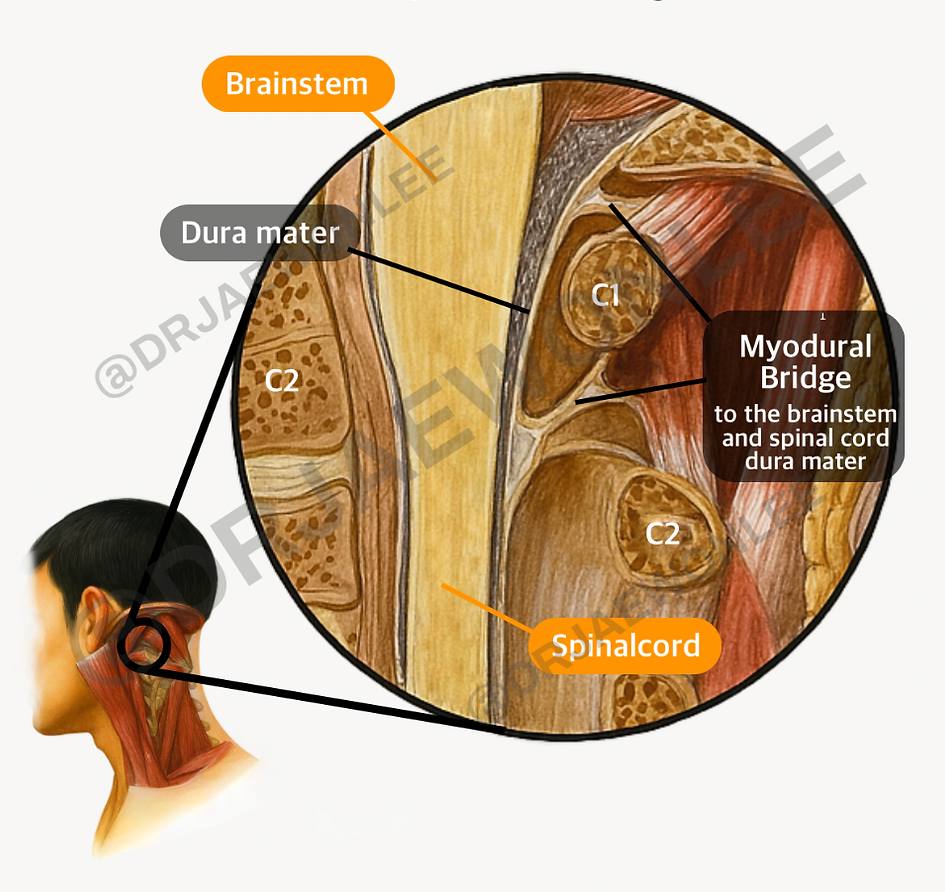
A. The Spinal Cord – Altered biomechanics in the upper cervical can cause increased traction forces on the spinal cord. The upper neck is attached to the spinal cord via ligaments called meninges, more specifically in this case the dura mater, and a muscle known as the myodural bridge. Therefore, when the top vertebrae are misaligned, normal tension in these tissues can be altered resulting in pulling on the spinal cord.
B. Muscular Balance – the head and neck relationship impacts how the rest of the spine functions – often seen as tight shoulders, uneven weight distribution, or spinal tension.
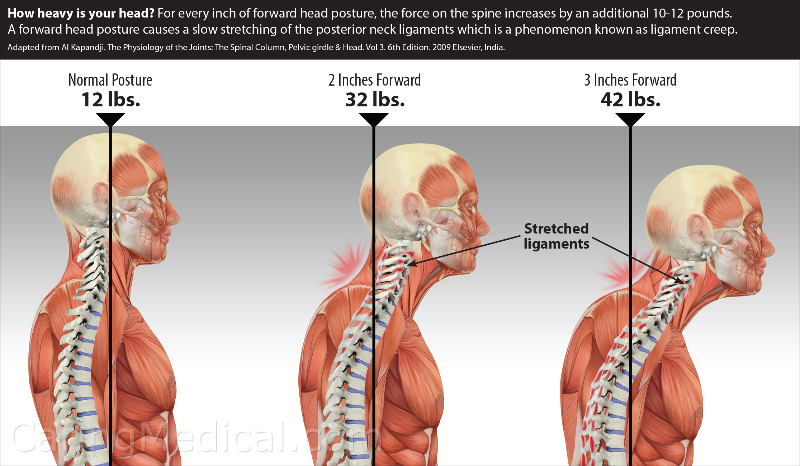
Chronic forward head posture disrupts the normal functioning of the muscles surrounding the head and neck and can lead to persistent muscle tightness that can contribute to the picture of headaches. No matter what stretches you do (I would not advocate in many cases), ice or heat you put on, pills you take – the tension remains.
Why is this? It is because what is underlying, the spine, has lost its optimal positioning. When the cervical spine loses its cervical curve, very commonly due to CCJ instability, muscles around the spine MUST get tight to PROTECT the spinal cord.
Unstable spine -> Unsafe signal to the nervous system -> Protective response
A preferable aim should be to improve the cervical curve, take stress off the nervous system so the muscles can now relax to their proper tone. This needs to be a deep, foundational change, not a superficial one. “Standing up straight” in many instances does not support proper cervical spine stability. We require proper alignment of each cervical vertebrae that is supported by an appropriate ability for your cranium to manage pressure – something almost all of our Practice Members do not present with when they see us here at Roots.
C. Blood flow – Blood is responsible for moving nutrients, such as oxygen, and waste to and from the brain.
A loss of cervical curve has been demonstrated to alter blood flow of the corresponding arteries. This is important as this has the potential to reduce the nutrient supply to the brain and brainstem which means reduced support for nervous system functioning…Imagine a brain that cannot operate at it best!
Furthermore, and maybe more importantly, if waste cannot be removed efficiently from the brain then that is a BIG problem. It is suggested that migraines are linked to altered blood flow dynamics.
Your Brain is a toilet…
Think about our brain as a toilet (yes, our infinitely complex brain can be compared to a toilet). Every time our brain is used, it produces metabolic waste, akin to one using a toilet. Now what do you do when you use a toilet? You flush (I hope). Our brains are the same, every time you create waste, the brain must flush to keep it “clean” so to speak. The brain predominantly flushes when you’re lying on your back, namely in the night, as this position enables greatest venous blood drainage from the brain via the internal jugular vein (a big vein). This vein must be open to enable blood to drain from the head, i.e. the internal jugular vein allows for flushing.

Notice how all these veins pass near or through the cervical spine?
In one study, it was found that the greatest areas of internal jugular vein narrowing (greater than 50%) occurred in the upper cervical and skull base regions, namely at C1.


Misalignment in the upper cervical region and loss of optimal cervical curve can disrupt blood flow to and from the brain, altering normal pressure dynamics. This may disrupt blood-brain perfusion and waste drainage…
…So what does this mean?
Less nutrients to the brain for activity and waste does not flush!
Imagine a poor flushing system every day, for weeks, months, years! It provides huge potential to problematic function.
Question: How can your nervous system support proper healing, adaptation and function if it is lacking it’s nutrients? That’s like asking a car to run on no fuel and a clogged up exhaust (not a mechanic)!
D. Cerebrospinal Fluid (CSF) flow – This is the brain’s own clear, protective river – circulating rhythmically around the brain and spinal cord to cushion, clean, and nourish the nervous system. It pulses gently through the narrow passage at the base of the skull and down the neck. This flow isn’t just plumbing – it’s vital to brain health, waste clearance, and pressure management.
Scientists have shown that gross body positioning and the shape of the spinal canal can change how this fluid moves at the upper cervical spine (namely, C2). CSF needs to pass through the CCJ and circulate through the entire spine; it’s reasonable to think an optimal cervical curve supports this flow.
When that natural “C-shape” flattens or shifts, it has the potential to alter the geometry of the passage of CSF, creating resistance and changing its pulsation. Some of these subtle changes can be seen on MRI (below as the white fluid, appearing obstructed on the R image but not the left) but research is still emerging at this moment.


While research continues to evolve, these mechanisms help explain why improving cervical spine alignment can have wide-reaching effects. Our aim with Chiropractic is to improve spinal alignment and function, to support the ability for normal nervous system function. Normal functioning gives your body the best chance in healing and regulating, as it is designed.
Some Questions…
We see a number of changes with our Practice members’ experience of headaches and migraines when their nervous system is properly support with Chiropractic care. Here are some questions you can ask yourself:
- Do the headaches or migraines have a pattern?
- Do you get a feeling of full or specific head pressure?
- Do you have associated fatigue, poor concentration or “fogginess”?
- Do you experience nausea or vomiting?
- Do you experience dizziness?
- Do you experience an ill feeling, consistent “colds” or “flus”?
- Do you feel unintentionally irritable, on edge, short tempered?
- Do you get heart palpitations?
- Does coughing or sneezing or activity irritate you?
- Do you have low mood or motivation?
Many of these things have been reported by our practice members to be associated with their headaches and migraines.
Our Approach at Roots Chiropractic
At Roots Chiropractic in Horsham, we don’t treat headaches or migraines.
We typically see those who have tried a number of different approaches that work from the system of thinking that bias’ diagnosis i.e. label a set of symptoms then treat those directly e.g. with a local therapy, a drug, stimulation techniques, etc.
I’d like to highlight that there is nothing that I am saying is “incorrect” with these approaches at all. These can achieve the objective of pain relief that you or someone you know could be looking for but chances are if you’ve made it this far, you are looking for something different.
What we do is simply different and has worked for many of our practice members. That is, instead of treating symptoms, we restore normal function to the spine and nervous system – supporting the inherent drive that your body has to heal and work as it’s designed to.
We understand that your body has normal intelligent processes that support your ability to heal and thrive.
Our Assessment Process: Designed to understand your specific state
Our process is detailed and precise. We listen to your story, we identify what your nervous system has experienced and how this has contributed to where you currently find yourself with your health.
What makes us different is our deep understanding of the global patterns as it relates to the spine and nervous system. As well as HOW to address this and TRACK your progress over time.
- Global Tonal Assessment
- Integrated Specific Spinal Assessment
- Objective nervous system scans (Insight Scans – HRV, Thermography, sEMG)
Through a through neurological and structural assessment we can get to your specific issue that is stopping your nervous system function at its best.
Our Use of CBCT
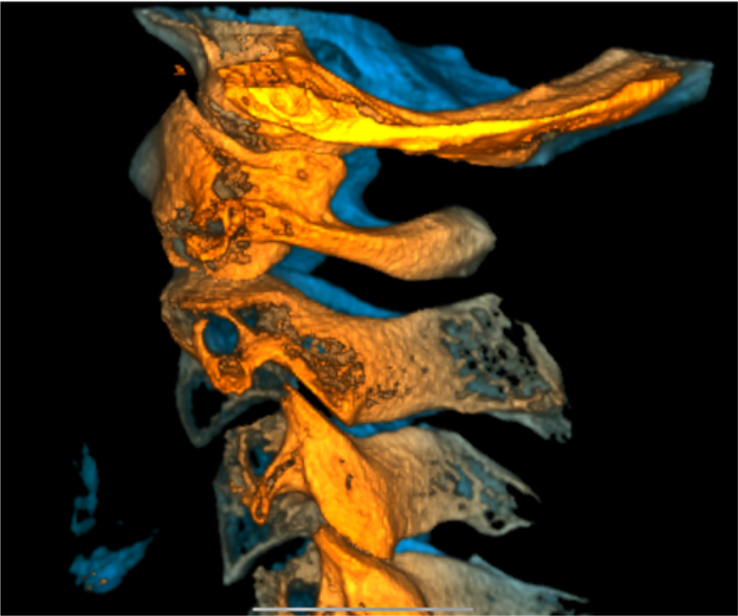
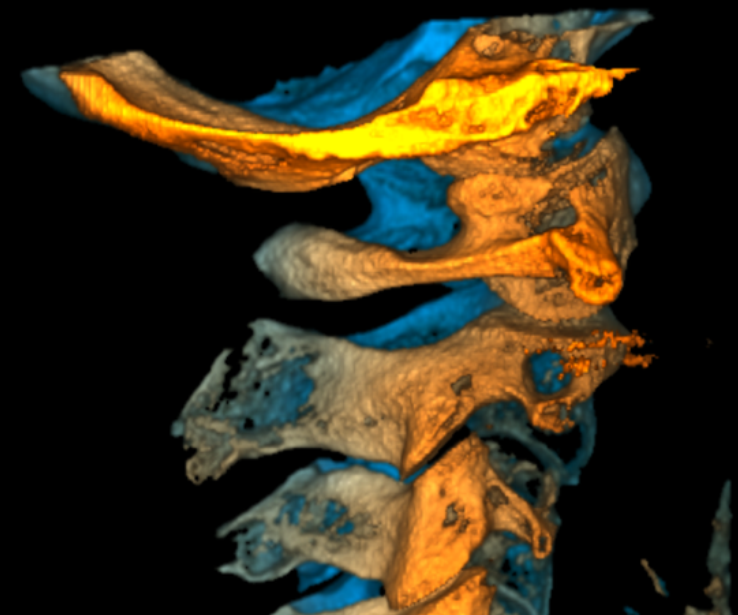
Additionally, our Chiropractor is trained in Upper Cervical Specific meaning they are able to refer and analyse specialised 3D CBCT imaging. These scans allow one to see the condition of your upper cervical spine in extraordinary detail – from multiple planes – and help us determine whether structural imbalance could be influencing nervous system function. When clinically indicated, we refer to 3BEAM in Harley Street for these scans (approximate 50-minute journey from Horsham train station), to ensure even the most complex of cases can be catered for, specifically.
These scans come at a separate cost, at the time of writing this post they are charged at £200 by 3BEAM. This provides invaluable information about what is going on in your spine. This level of specificity guides our care and helps ensure adjustments are safe, accurate, and tailored to the individual.
The Bigger Picture
At Roots Chiropractic, our philosophy is simple but powerful:
The body is intelligent and capable of healing when it’s functioning as it should.
Under Chiropractic Care, many people notice their headaches or migraines become less intense, less frequent, or resolve altogether – not because we’ve “treated” the symptom, but because we’ve taken stress off your nervous system to enable your body to do the healing.
Pain is not the enemy – it’s feedback. Our goal is to help people understand that message and restore the normal flow of information to and through the nervous system so the body can do what it’s designed to do – adapt, heal, and thrive.
If headaches or migraines have been limiting your life, and you’re curious whether your nervous system can support you, we’d love to explore that with you.
Book a consultation at Roots Chiropractic in Horsham and discover how precise, gentle care can help restore clarity, ease and robustness back to your body.
I hope this read provided value to you. It is my understanding, and hope, that every individual (newborn to senior) can live with a proper functioning nervous system and experience optimal health. I think that would make a huge change in the world that I want to be a part of – I trust you do too. Please reach out – I am here to help.
Kindest,
Morgan
References
Enix DE, Scali F, Pontell ME. The cervical myodural bridge: a review of literature and clinical implications. J Can Chiropr Assoc. 2014 Jun;58(2):184-92. PMID: 24932022; PMCID: PMC4025088.
Sung YH. Suboccipital Muscles, Forward Head Posture, and Cervicogenic Dizziness. Medicina (Kaunas). 2022 Dec 5;58(12):1791. doi: 10.3390/medicina58121791. PMID: 36556992; PMCID: PMC9786116.
Lin G, Zhao X, Wang W, Wilkinson T. The relationship between forward head posture, postural control and gait: A systematic review. Gait Posture. 2022 Oct;98:316-329. doi: 10.1016/j.gaitpost.2022.10.008. Epub 2022 Oct 14. PMID: 36274469.
Harrison DE, Harrison DD, Janik TJ, William Jones E, Cailliet R, Normand M. Comparison of axial and flexural stresses in lordosis and three buckled configurations of the cervical spine. Clin Biomech (Bristol). 2001 May;16(4):276-84. doi: 10.1016/s0268-0033(01)00006-7. PMID: 11358614.
San Millán Ruíz D, Gailloud P, Rüfenacht DA, Delavelle J, Henry F, Fasel JH. The craniocervical venous system in relation to cerebral venous drainage. AJNR Am J Neuroradiol. 2002 Oct;23(9):1500-8. PMID: 12372739; PMCID: PMC7976803.
Buch K, Groller R, Nadgir RN, Fujita A, Qureshi MM, Sakai O. Variability in the Cross-Sectional Area and Narrowing of the Internal Jugular Vein in Patients Without Multiple Sclerosis. AJR Am J Roentgenol. 2016 May;206(5):1082-6. doi: 10.2214/AJR.15.14689. Epub 2016 Mar 9. PMID: 26958902.
Bulut M.D., Alpayci M., Şenköy E., Bora A., Yazmalar L., Yavuz A., Gülşen İ. Decreased Vertebral Artery Hemodynamics in Patients with Loss of Cervical Lordosis. Med. Sci. Monit. 2016;22:495–500. doi: 10.12659/MSM.897500.
129.Kruit M. C., van Buchem M. A., Hofman P. A. M., et al. Migraine as a risk factor for subclinical brain lesions. The Journal of the American Medical Association. 2004;291(4):427–434. doi: 10.1001/jama.291.4.427. [DOI] [PubMed] [Google Scholar]
Buch K, Groller R, Nadgir RN, Fujita A, Qureshi MM, Sakai O. Variability in the Cross-Sectional Area and Narrowing of the Internal Jugular Vein in Patients Without Multiple Sclerosis. AJR Am J Roentgenol. 2016 May;206(5):1082-6. doi: 10.2214/AJR.15.14689. Epub 2016 Mar 9. PMID: 26958902. Wilson MH. Monro-Kellie 2.0: The dynamic vascular and venous pathophysiological components of intracranial pressure. J Cereb Blood Flow Metab. 2016 Aug;36(8):1338-50. doi: 10.1177/0271678X16648711. Epub 2016 May 12. PMID: 27174995; PMCID: PMC4971608.