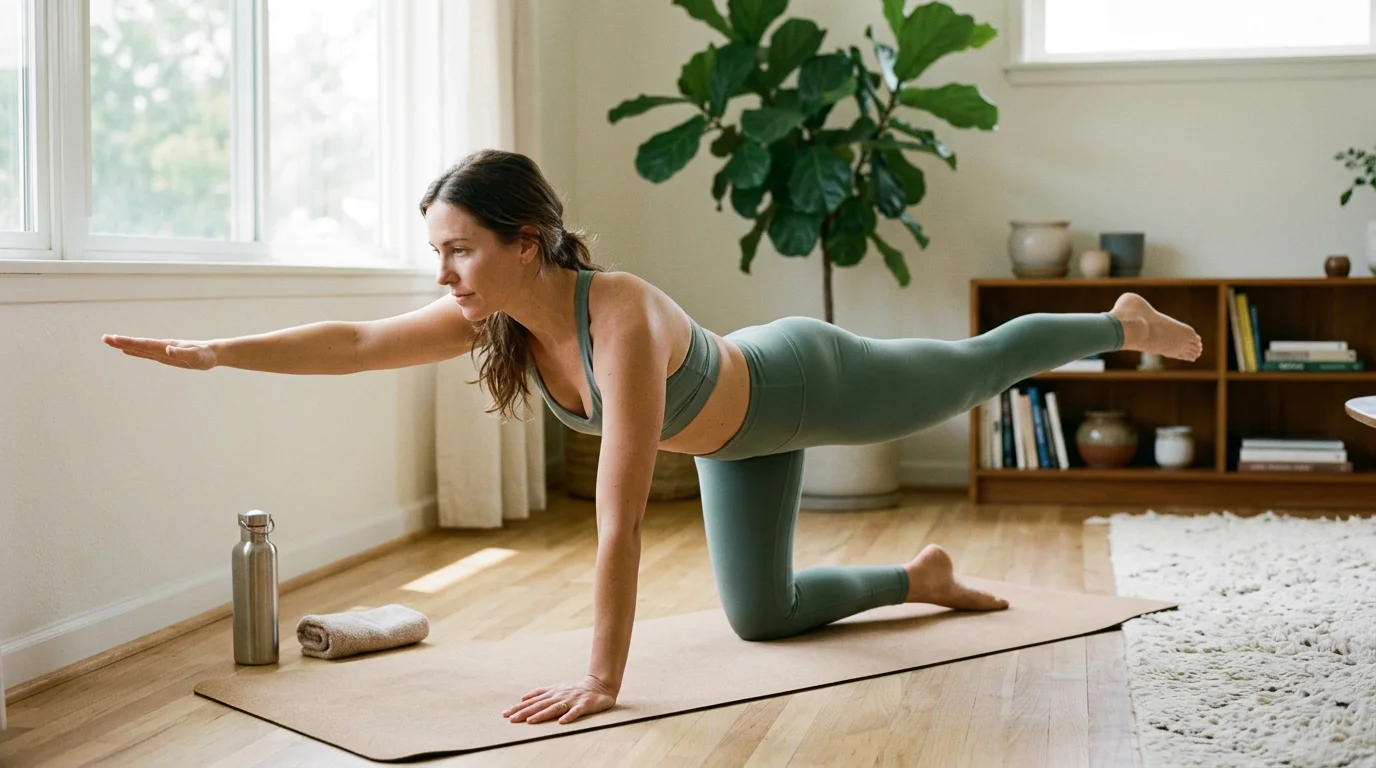
Why Movement and Comfort Are Deeply Linked
When we talk about movement and comfort, most people immediately think of exercise or maybe stretching after a long day. But the connection goes deeper than that — much deeper than just “moving more helps you feel better.”
It’s more like this quiet conversation happening inside your body all the time. You move, your body responds. You stay still too long, your body responds again — just in a different way.
At Roots Chiropractic, we often see how movement and comfort are directly tied together. And not in a complicated, clinical way either. More like a practical, everyday reality that shows up when someone bends down to pick something up… or tries to stand after sitting through a long meeting and suddenly goes, “Eish, I’ve stiffened up.”
That feeling? That’s the connection speaking.
Why Movement Is the Body’s Natural Language
The body doesn’t really “like” long periods of stillness. It’s designed for variation — sitting, standing, walking, stretching, bending. All of it.
When we talk about the connection between movement and joint health, what we’re really talking about is how joints stay nourished through use. Movement helps circulate fluids, keeps tissues flexible, and signals to the nervous system that everything is working as it should.
Think of it like a door hinge in a Cape Town seaside home. If it’s used regularly, it stays smooth. But if it sits unused for too long, it starts to creak. Not broken — just a bit stiff, a bit neglected.
Your joints work in a similar way. They don’t need punishment. They just need regular motion.
And honestly, even small movements count more than people think.
Stillness Isn’t the Enemy — But Too Much of It Can Be
Let’s be fair: stillness isn’t bad. Rest is important. We all need it.
But the issue comes when stillness becomes the default for long stretches of time.
That’s where how movement improves physical comfort becomes really clear. Because when the body stays in one position for too long — whether sitting at a desk, driving, or binge-watching something on a rainy Cape winter afternoon — tissues tighten. Blood flow slows. Things just… feel heavier.
You might not notice it immediately. But when you finally stand up and stretch, that tightness hits you all at once.
Almost like your body saying, “Oh, you’re moving again? Good, I was wondering.”
It’s not dramatic. Just honest feedback.
The Science Behind Movement and Comfort
On a more technical level, movement affects multiple systems at once:
- Muscles lengthen and contract, preventing stiffness
- Joints circulate synovial fluid (basically their natural lubricant)
- Blood flow improves oxygen delivery
- The nervous system recalibrates tension levels
So when people ask about movement and comfort, the answer is simple but layered: movement keeps the body in a state of readiness rather than restriction.
There’s also a neurological side to it. The brain constantly monitors how much tension is in the body. When movement is limited, it can be interpreted as “protection mode,” which sometimes increases tightness even more.
It’s a bit of a loop, really. But a reversible one.
Why You Feel Stiff After Sitting (and It’s Not Just Age)
A common misconception is that stiffness is just “part of getting older.” But that’s not the full story.
More often, it’s about patterns of movement — or lack thereof.
If you sit for long periods without changing position, the body adapts to that posture. And when you finally move, everything feels a bit resistant. Not because something is wrong, but because the system has been quiet for too long.
This is where how movement improves physical comfort becomes especially relevant.
Even small interruptions — standing up every 30–60 minutes, rolling your shoulders, or taking a short walk — can dramatically change how your body feels by the end of the day.
It doesn’t need to be complicated. In fact, the simpler, the better.
Movement Doesn’t Have to Be “Exercise”
One of the biggest misunderstandings is that movement only counts if it’s a workout.
But your body doesn’t really care whether it’s a gym session or you walking to the kitchen to make tea. It just registers motion.
This is important when thinking about the connection between movement and joint health. Because consistency matters more than intensity.
A few examples of “everyday movement” that actually matter:
- Stretching while waiting for the kettle to boil
- Walking while on a phone call
- Getting up to change rooms instead of staying seated
- Light shoulder rolls during the workday
It all adds up. Quietly, but meaningfully.
Almost like small deposits into a health account you don’t always check.
A Simple Analogy: Your Body Is Like a Bicycle Chain
Here’s a very South African analogy that might make sense if you’ve ever had a bike growing up — or even just seen one left outside in salty coastal air.
A bicycle chain works best when it moves regularly and is lightly maintained. When it sits still too long, it stiffens. Not broken, just… resistant.
Movement is the “oil” that keeps your body functioning smoothly.
Without it, things still work — but with more effort, more friction, more discomfort.
And that friction? That’s often what people describe as stiffness or tightness.
Comfort Is Not Just the Absence of Pain
Comfort is a tricky word. It doesn’t just mean “no pain.”
It also means ease of movement, freedom in your body, and not feeling like you need to “warm up” just to function normally.
When we explore movement and comfort, we’re really looking at how the body moves through daily life without resistance.
Sometimes people only realise their discomfort when it improves — which is interesting. You don’t always notice ease until you’ve experienced restriction.
A bit like only appreciating a smooth-running car after driving one that keeps stalling.
The Role of Chiropractic Care in Movement
From a chiropractic perspective, movement is central to how the body expresses health.
When joints aren’t moving well, the surrounding muscles often compensate. That can lead to stiffness patterns or discomfort that builds slowly over time.
Chiropractic care aims to restore better joint motion, which then allows movement to feel more natural again. Not forced. Not restricted. Just easier.
And when movement improves, comfort usually follows. Not instantly, but gradually — like things settling back into place.
Internal Links for Further Reading
To explore more about how the body functions and adapts:
- Spinal health and movement patterns.
- Understanding posture and daily strain.
- How chiropractic care supports mobility.
External References
For broader health and movement insights:
- World Health Organisation – Physical activity recommendations and sedentary behaviour guidelines
https://www.who.int/news-room/fact-sheets/detail/physical-activity - Mayo Clinic – Exercise and musculoskeletal health information
https://www.mayoclinic.org/healthy-lifestyle/fitness/in-depth/exercise/art-20048389
FAQ: Movement and Comfort
Why does my body feel stiff after sitting for long periods?
Because the body adapts to stillness. Muscles and joints reduce activity, and when you move again, everything needs a moment to “wake up.”
How does movement improve physical comfort?
Movement increases circulation, keeps joints lubricated, and reduces muscular tension. This helps the body feel more open and less restricted.
Is walking enough movement for joint health?
Yes. Walking is one of the simplest and most effective forms of movement for maintaining joint health and overall mobility.
Can too little movement cause long-term discomfort?
Yes, prolonged inactivity can contribute to stiffness patterns and reduced joint mobility over time. The body thrives on regular variation in movement.